Engineered Extracellular Vesicles Advancing Cancer Therapy Through Precision Nanomedicine
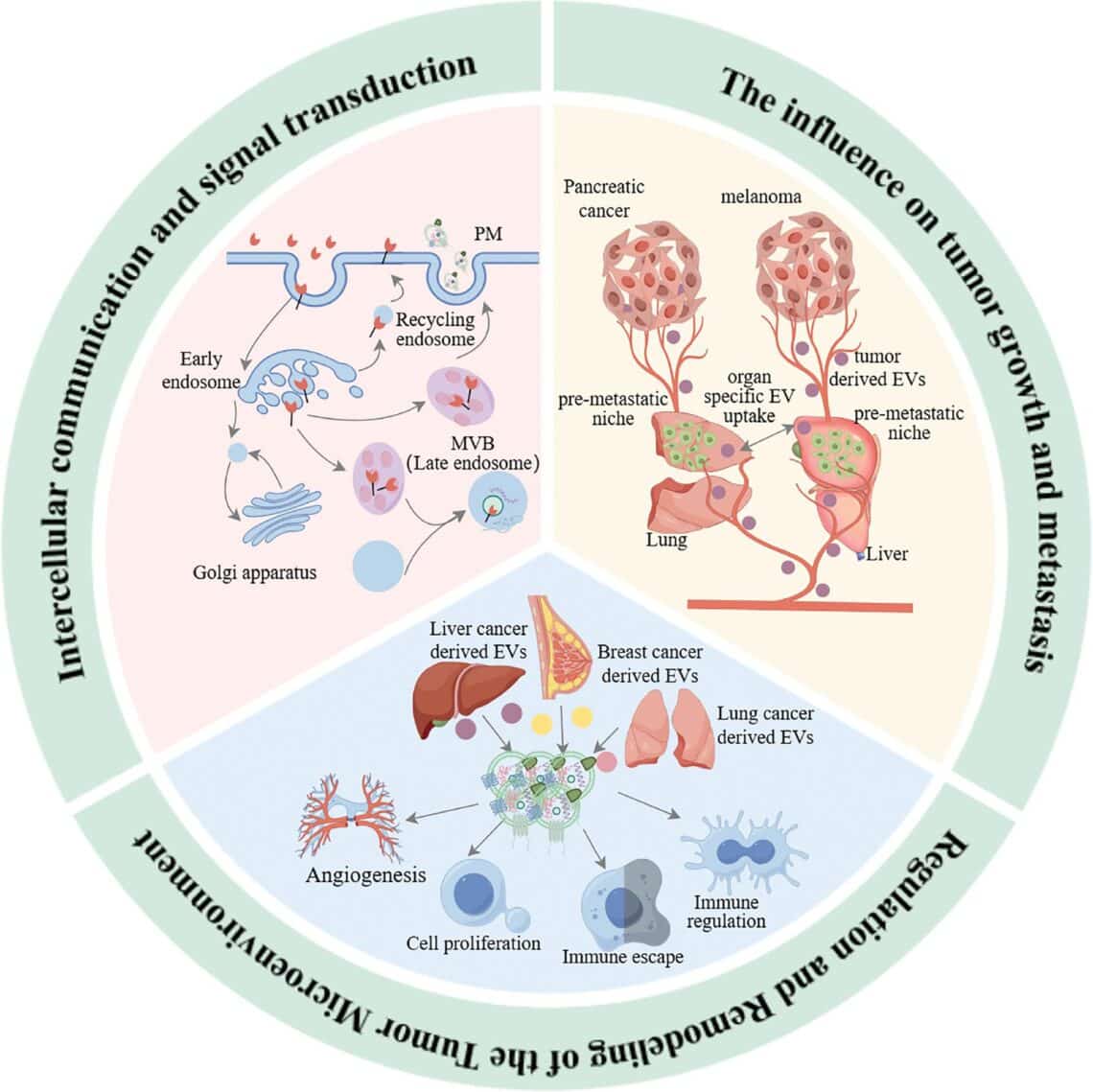
Announcing a new article publication in BIO IntegrationExtracellular vesicles (EVs) are nanoscale membrane structures secreted by cells that contain proteins, nucleic acids, and lipids, and reflect the physiologic state of the parent cells. EVs have a critical role in intercellular communication, signal transduction, and tumorigenesis, influencing tumor progression, metastasis, and remodeling of the tumor microenvironment. Recent advances have highlighted the potential of EVs as natural nanocarriers for cancer therapy that offer advantages, such as biocompatibility, low immunogenicity, and the ability to cross biological barriers.
Engineered EVs may overcome many of the limitations of natural EVs, including the low yield, heterogeneity, and limited targeting capabilities. Engineered EVs have shown promise in preclinical studies through genetic engineering, surface modification, and optimized loading strategies in the delivery of therapeutic agents, such as CRISPR/Cas9, mRNA, siRNA, and drugs with enhanced precision and efficacy. EVs loaded with CRISPR/Cas9 plasmids targeting PARP-1 have been shown to induce apoptosis in ovarian cancer cells and increase the sensitivity to cisplatin.
Engineered EVs expressing PD-1/PD-L1 blocking antibodies have demonstrated potent anti-tumor immune activity in melanoma models by reactivating exhausted T cells, highlighting the potential for use in cancer immunotherapy. These EVs have been studied in preclinical settings involving targeted therapy, immunotherapy, and combination therapies, such as chemo-photothermal approaches, with the potential to overcoming multidrug resistance and improving treatment outcomes. Despite the promise of EVs, challenges remain in large-scale production, purification, and standardization. Corollary studies are warranted to optimize EV engineering, enhance safety, and evaluate the potential for clinical translation in oncology.
Read full open access article: https://www.scienceopen.com/hosted-document?doi=10.15212/bioi-2026-0007
# # # # # #
BIO Integration is fully open access journal which will allow for the rapid dissemination of multidisciplinary views driving the progress of modern medicine.
As part of its mandate to help bring interesting work and knowledge from around the world to a wider audience, BIOI will actively support authors through open access publishing and through waiving author fees in its first years. Also, publication support for authors whose first language is not English will be offered in areas such as manuscript development, English language editing and artwork assistance.
Please visit www.bio-integration.org to learn more about the journal.
Editorial Board: https://bio-integration.org/editorial-board/
BIOI is available on the ScienceOpen platform (https://www.scienceopen.com/search#collection/55f45bac-fd64-431c-9fe7-50fd6a7f8781).
Submissions may be made using ScholarOne (https://mc04.manuscriptcentral.com/bioi).
There are no author submission or article processing fees.
Follow BIOI on Twitter @JournalBio; Facebook (https://www.facebook.com/BIO-Integration-Journal-108140854107716/) and LinkedIn (https://www.linkedin.com/company/bio-integration-journal/).
ISSN 2712-0074
eISSN 2712-0082
Shuang Ma, Yue Niu, Shang Sui al. Engineered Extracellular Vesicles: Advancing Cancer Therapy Through Precision Nanomedicine. BIOI. 2026. Vol. 7(1). DOI: 10.15212/BIOI-2025-0208.


You May Also Like
Integrated Single-cell RNA Sequencing Atlas of White Matter Microglial Functional Diversity in Chronic Multiple Sclerosis
Trends in Gallbladder and Biliary Tract Cancer Global Burden (1990–2021): A Socioeconomic Gradient Analysis and Projections for 2040