Mechanistic Insights and Therapeutic Potential of Quercetin in Neuroprotection: A Comprehensive Review of Pathways and Clinical Perspectives
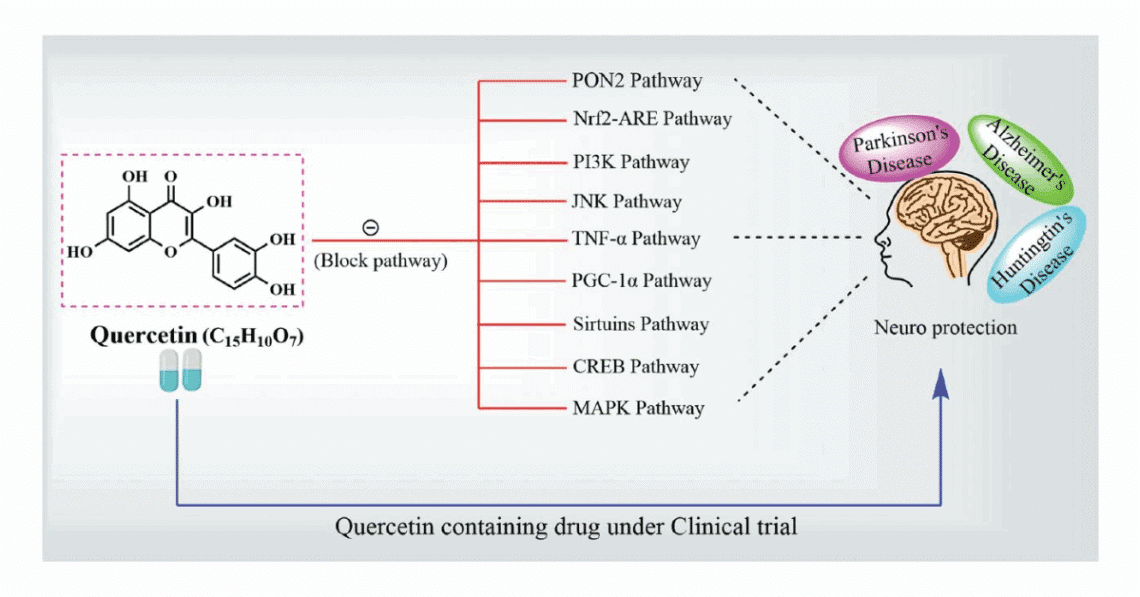
Announcing a new article publication for BIO Integration journal. Quercetin, a bioactive flavonoid abundant in diverse plant species, has been extensively investigated for its neuroprotective properties against neurodegenerative diseases (NDDs), such as Alzheimer’s, Parkinson’s, and Huntington’s diseases. This article systematically explored the multifaceted therapeutic potential of quercetin, emphasizing the mechanisms of action, pharmacologic efficacy, and translational significance in modern neurotherapeutics.
Quercetin demonstrated potent antioxidant effects by scavenging reactive oxygen species and modulating the Nrf2-ARE pathway, thereby mitigating oxidative stress, a hallmark of NDDs associated with mitochondrial dysfunction, protein aggregation, and neuronal apoptosis. Furthermore, the ability of quercetin to regulate the PI3K/Akt pathway promoted mitochondrial biogenesis and preserved neuronal integrity by stabilizing membrane potential. Anti-inflammatory effects were evident vis-a-vis inhibition of the NF-κB and MAPK pathways, suppression of microglial activation, and cytokine release. In addition, quercetin disrupted tau hyperphosphorylation via GSK3β inhibition and attenuated amyloid-beta toxicity, offering cognitive protection.
Preclinical studies highlighted the ability of quercetin to modulate excitotoxicity and enhance neuroplasticity, while emerging evidence support synergy of quercetin with existing pharmacologic agents. Genetic variations influencing key pathways, including Nrf2 and PI3K, underscore the necessity for personalized therapeutic approaches. Advances in drug delivery systems, scaffold modelling, and CRISPR-mediated interventions revealed the potential for optimizing the bioavailability and specificity of quercetin. This review bridges critical knowledge gaps by integrating mechanistic insights with clinical perspectives, advocating for translating quercetin-based therapies into precision medicine. By addressing challenges in bioavailability and exploring innovative strategies, this article underscores the promise of quercetin as a cornerstone for neuroprotective interventions in NDDs.
Read More: https://www.scienceopen.com/hosted-document?doi=10.15212/bioi-2025-0073
BIO Integration is fully open access journal which will allow for the rapid dissemination of multidisciplinary views driving the progress of modern medicine.
As part of its mandate to help bring interesting work and knowledge from around the world to a wider audience, BIOI will actively support authors through open access publishing and through waiving author fees in its first years. Also, publication support for authors whose first language is not English will be offered in areas such as manuscript development, English language editing and artwork assistance.
Please visit www.bio-integration.org to learn more about the journal.
Editorial Board: https://bio-integration.org/editorial-board/
BIOI is available on the ScienceOpen platform (https://www.scienceopen.com/search#collection/55f45bac-fd64-431c-9fe7-50fd6a7f8781).
Submissions may be made using ScholarOne (https://mc04.manuscriptcentral.com/bioi).
There are no author submission or article processing fees.
Follow BIOI on Twitter @JournalBio; Facebook (https://www.facebook.com/BIO-Integration-Journal-108140854107716/) and LinkedIn (https://www.linkedin.com/company/bio-integration-journal/).
ISSN 2712-0074
eISSN 2712-0082
Ishita Debnath, Suman Ghosh and Sajal Kumar Jha et al. Mechanistic Insights and Therapeutic Potential of Quercetin in Neuroprotection: A Comprehensive Review of Pathways and Clinical Perspectives. BIOI. 2025. Vol. 6(1). DOI: 10.15212/bioi-2025-0073


You May Also Like
Review for Antimicrobial Peptides with Anticancer Properties: Re-purposing of Potential Anticancer Agents
Differentiating Hepatic Perivascular Epithelioid Cell Tumor from Hepatocellular Carcinoma without High-Risk Factors using Contrast-Enhanced Ultrasound